ISLAMABAD:Four of Pakistan’s five major oil refineries have signed upgrade agreements involving an estimated investment of $5 billion, formally launching a major modernisation programme aimed at increasing domestic petrol production by 72 percent, high-speed diesel (HSD) output by 39 percent and reducing furnace oil production by 63 percent.
Thank you for reading this post, don't forget to subscribe!The agreements, signed under the Brownfield Petroleum Refining Policy 2026, mark a significant step towards modernising Pakistan’s ageing refining infrastructure, improving fuel quality and reducing the country’s reliance on imported petroleum products.
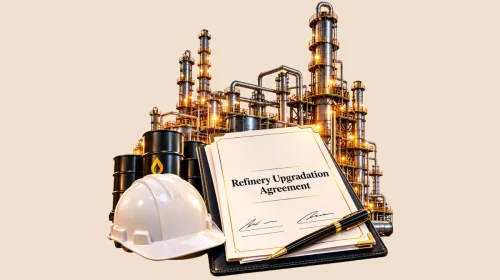
Attock Refinery Limited (ARL), National Refinery Limited (NRL), Pakistan Refinery Limited (PRL) and Cnergyico Petroleum Pakistan Limited have signed Refinery Upgradation Agreements with Inter State Gas Systems (ISGS), a subsidiary of the Petroleum Division designated to execute the agreements and monitor their implementation.
Three listed refineries — ARL, NRL and Cnergyico — have separately disclosed the signing of their agreements to the Pakistan Stock Exchange (PSX).
The fifth refinery, Pak-Arab Refinery Company (PARCO), a joint venture between Pakistan and Abu Dhabi, has yet to sign its agreement. However, PARCO Managing Director Irteza Ali Qureshi said the company would, “InshaAllah, sign within the stipulated timelines as per the policy.”
PARCO’s participation could increase the total investment under the refinery upgrade programme from approximately $5 billion to around $6 billion, bringing all five major domestic refineries under the modernisation framework.
The programme envisages substantial investment in new processing facilities, cleaner fuel production and changes to the existing refinery product mix, with participating companies required to arrange financing and complete engineering, procurement, construction and commissioning within the stipulated five-year period.
Usama Qureshi, Vice Chairman of Cnergyico, clarified that the projected production increases represent the combined output of existing domestic refineries following completion of their respective upgrade projects, rather than the production targets of any individual refinery.
According to the projections, domestic petrol production is expected to increase from 10,700 tonnes per day (TPD) to 18,400 TPD, representing an increase of approximately 72 percent.
Similarly, HSD production is projected to rise from 21,240 TPD to 29,520 TPD, an increase of around 39 percent.
Furnace oil production, meanwhile, is expected to decline from 15,417 TPD to 5,714 TPD, representing a reduction of approximately 63 percent.
The projected changes would translate into additional domestic production of 7,700 TPD of petrol and 8,280 TPD of HSD, alongside a reduction of approximately 9,703 TPD in furnace oil output.
Qureshi said the additional petrol production would significantly improve domestic availability and reduce Pakistan’s dependence on imported refined petrol. However, he cautioned that the actual reduction in imports would depend on domestic petroleum demand, refinery utilisation and the timely completion of the upgrade projects.
The increased HSD output is also expected to strengthen domestic diesel availability and reduce import requirements, particularly given the fuel’s widespread use in transport, agriculture and industry.
A key objective of the programme is to enable refineries to convert a greater proportion of their crude oil intake into petrol, diesel and other higher-value petroleum products instead of furnace oil
The upgrades will also enable domestic refineries to produce fuels meeting Euro-V specifications, which permit a maximum sulphur content of 10 parts per million (ppm) in petrol and diesel, compared with 50 ppm under Euro-IV standards.
The Brownfield Petroleum Refining Policy 2026, approved by the Cabinet Committee on Energy on July 28, supersedes previous refining policies and provides fiscal incentives, tariff protection and other measures to facilitate investment in refinery modernisation.
Refinery industry sources clarified that the policy provides 10 percent customs or regulatory duty protection on imported petrol and diesel for seven years.
The incremental tariff protection available to eligible refineries will be deposited into dedicated refinery upgrade accounts managed by ISGS, rather than the Inland Freight Equalisation Margin (IFEM) pool.
These funds will be utilised to finance approved refinery modernisation projects, including the installation of new processing units, production of Euro-V-compliant fuels and reduction in furnace oil output, subject to prescribed monitoring and disbursement procedures.
Under the policy, incremental tariff protection of 2.5 percent on HSD and a 10 percent incremental incentive on petrol will be deposited into the dedicated upgrade accounts.
Industry sources explained that the seven-year incentive period for each refinery is linked to the signing of its upgrade agreement and establishment of the prescribed upgrade account, subject to the provisions of the amended policy.
The sources also clarified that the existing 7.5 percent deemed duty on HSD will continue for the specified 20-year period or until deregulation, whichever occurs earlier
They described the deemed duty as a form of tariff protection for domestic refineries, similar to protection available to other industrial sectors.
Its continuation is intended to support the long-term financial sustainability of domestic refineries and facilitate recovery of their upgrade investments.
The policy also provides for reimbursement through IFEM of customs duty on crude oil, while certain sales-tax-related costs associated with refinery operations will continue to be reimbursed through IFEM, subject to applicable provisions.
Equipment and materials required for the refinery upgrade projects will also be exempt from sales tax.
Apart from modernising production facilities, the policy introduces additional requirements aimed at strengthening Pakistan’s petroleum supply security.
Following completion of their upgrades, refineries will be required to maintain crude oil stocks equivalent to at least 14 days of their refining capacity.
Refineries dependent on imported crude oil will also be required to maintain an additional five days of supply cover at sea.
The policy allows upgraded refineries to sell petroleum products to any oil marketing company (OMC) licensed by the Oil and Gas Regulatory Authority (OGRA) and to export surplus petroleum products, subject to regulatory approval and domestic demand requirements.
Binding agreements between refineries and OMCs for the purchase and sale of major petroleum products, particularly petrol and HSD, are also envisaged to ensure continuity and stability in the domestic oil supply chain.
The Petroleum Division is required to notify Euro-V fuel specifications within one month of the signing of the agreements, with refineries required to comply following completion of their respective upgrades.
Cnergyico’s Group CEO, Amir Abbassciy, described the signing of the Refinery Upgradation Agreement as a “remarkable achievement” and a long-awaited milestone for Pakistan’s refining sector.
He said the company was fully committed to the successful implementation of its upgrade project, which had been structured into three phases.
The first phase will focus on converting the refinery to produce Euro-V-compliant fuels, while the second will involve reducing furnace oil production. The third phase will focus on enhancing refinery capacity.
Abbassciy said Cnergyico was already at an advanced stage of project implementation and remained committed to moving forward expeditiously.
The company expects its investment to improve the quality of locally produced petroleum products, reduce dependence on imported refined fuels and strengthen Pakistan’s long-term energy security.
Adil Khattak, CEO of Attock Refinery and Chairman of the Energy Committee of the Overseas Investors Chamber of Commerce and Industry (OICCI), described the signing of the agreements as a historic milestone for Pakistan’s refining industry.
He said the projects would fundamentally modernise Pakistan’s refining infrastructure, enable the production of cleaner Euro-V fuels, substantially reduce furnace oil output and replace significant quantities of imported petroleum products.
Khattak recalled that the refining policy journey began with the first draft in December 2019, followed by its approval in August 2023 and subsequent amendments before reaching the implementation stage.
He said industry estimates indicated that refinery upgradation could potentially save Pakistan around $1.5 billion annually in foreign exchange.
The actual savings will depend on the completion of the projects, domestic fuel consumption, refinery operating rates and the extent to which additional local production replaces imported petroleum products.
With four refineries having signed their agreements, the programme now enters its implementation phase, during which the participating companies will be required to secure financing and undertake complex engineering, procurement, construction and commissioning activities.
PARCO’s anticipated participation would further expand the programme’s investment envelope to approximately $6 billion and bring all five major domestic refineries into the upgrade framework.
The successful completion of the projects is expected to reshape Pakistan’s domestic petroleum supply mix by substantially increasing petrol and diesel production, reducing furnace oil output and enabling local refineries to produce cleaner fuels.
However, the scale of the anticipated benefits will ultimately depend on the timely execution of the upgrade projects, availability of financing, refinery utilisation and the growth of domestic petroleum demand.
For Pakistan, which relies heavily on imported petroleum products, the programme represents a major investment in domestic refining capacity, with the potential to reduce refined fuel imports, improve fuel quality and strengthen long-term petroleum supply security.